Tzintzuntzan, Lake Pátzcuaro, Michoacán · 1945
Grandpa's First Day of the Dead: Mexico, 1945
October 29, 2026 · 16 min · Audio in Spanish, English
Pressing play loads YouTube (Google). Privacy
Day of the Dead in Mexico, 1945. In Tzintzuntzan, a town of potters on the shore of Lake Pátzcuaro, in Michoacán, a family is preparing the first ofrenda, or Day of the Dead altar, for the grandfather, who died that year. They believe that on the night of the souls he'll come back to visit. We follow them from the Friday market in Pátzcuaro to the predawn vigil in the cemetery: how the ofrenda came together, what the town believed about that visit, and what things cost, from beeswax candles to duck from the lake.
Rockets announcing the fiesta nine days ahead; the Friday market in Pátzcuaro; the priciest beeswax candle, which cost one peso in the town's shops, half a day's pay for a laborer on the highway; cempasúchil marigolds, which the town called simplasuche, and the purple orchids called flor de ánima, the flower of the souls; the arco, a little table with reed arches covered in flowers, with oranges, chayotes and pan de muerto, the bread of the dead, shaped like a person, with currant eyes; up to a thousand canoes hunting ducks near Janitzio on October 31; the night of the angelitos, the children who had died; the family's own corn dishes, corundas and uchepos; what Tzintzuntzan believed about the visit of the ánimas, the souls of the dead; and the predawn vigil, with several hundred candles in the cemetery. Most of it comes from the anthropologist George M. Foster, who lived in the town in 1945 and even wrote down the prices.
The story, to read
The whole episode, chapter by chapter. Tap the minute to watch from there.
Tzintzuntzan, 1945: the first ofrenda ▶ 0:00
Tzintzuntzan, on the shore of Lake Pátzcuaro, in the fall of 1945. Let's imagine a family of potters preparing the first ofrenda, the altar of offerings, for the grandfather, who died this year. The family believes the dead come back to visit. Will the grandfather come to see it? His palm hat, white with its red band, still hangs on the wall, and this year no one wears it. To welcome him, everything has to shine: cempasúchil marigolds, wax candles, duck from the lake, and bread with currant eyes. Let's go with them and see what it all cost.
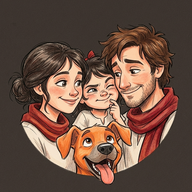
Before the Conquest, Tzintzuntzan was the capital of the P'urhépecha kings. In 1945, it's a town that lives off its clay. We know it in detail because an American anthropologist, George Foster, spent those months there and even wrote down the prices. Our family's house is adobe, with a tile roof and a dirt floor; in the yard is the round kiln where they fire the pots. There are no light bulbs: the town had electricity, but only 35 of its 248 homes had, in Foster's words, «bothered to install» it. The grandmother was born in a P'urhépecha village on the lake and speaks its language. And there's Ember: according to Foster, about half the homes had a dog. Foster noted something else: for someone who had died in the past year, the ofrenda was new, «more abundant and of better quality». And in a potter's house, the best has to be paid for.
Nine days of rockets ▶ 1:39
On October 23, at dawn, two rockets go off over the town. Two more at noon, and two more at sunset. The anthropologist wrote it down: it was the countdown, nine days before the fiesta. The next day, three rockets each time, and then four, until the 31st. In Tzintzuntzan, the fiesta was announced from the sky. The calendar was clear. The night of the 31st was the fiesta of the angelitos, the little angels, children who had died; November 1 was their day. The night of the 1st into the 2nd belonged to the ánimas, the souls of the grown-ups. The grandfather's night is that one, the last. By then the ofrenda has to be ready, and for that, it's off to the Pátzcuaro market on Friday.
Friday: off to the Pátzcuaro market ▶ 2:27
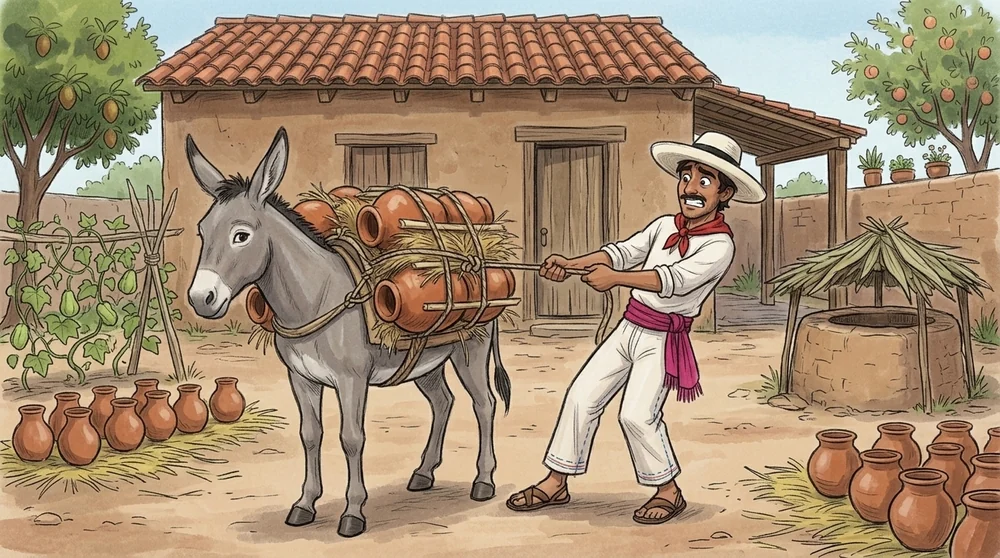
Friday, October 26, before dawn. The town plaza is already full of people waiting for the bus. Pátzcuaro had a market on Fridays: it was the region's real center of trade. The buses arrived already packed, and some waited, hoping a passing truck would stop and pick them up. Anyone carrying a lot of pottery didn't even try: they went on foot, driving their animals, a walk of about four hours. That's our father, with his pots tied down tight. Before buying, you have to sell. The anthropologist watched a potter haggle over a large pot with a couple from a P'urhépecha village: he asked three pesos, and finally let it go, with a smaller one, for three pesos and twenty-five centavos. For comparison, a laborer on the highway crew earned two pesos a day. A skilled potter, with his wife's help, could earn a good deal more. With those coins, the family will buy the grandfather's ofrenda.
In Pátzcuaro, the big plaza fills with stalls, many of them right on the ground. That market sold wax candles and copal incense, flowers, many kinds of bread, oranges, chayotes, cooked squash, tamales and atole, a warm corn drink. And things for the home: petates, woven sleeping mats, rebozo shawls, baskets, and pottery like our family's. For the Day of the Dead, Mexico's markets also filled with candlesticks, incense burners and candles of every size. The mother and the daughter carry the list in their heads. That Friday, the first ducks from the lake reach the market, but the big hunt is still to come. The duck can wait. First on the list is light.
How much did a candle cost? ▶ 4:10
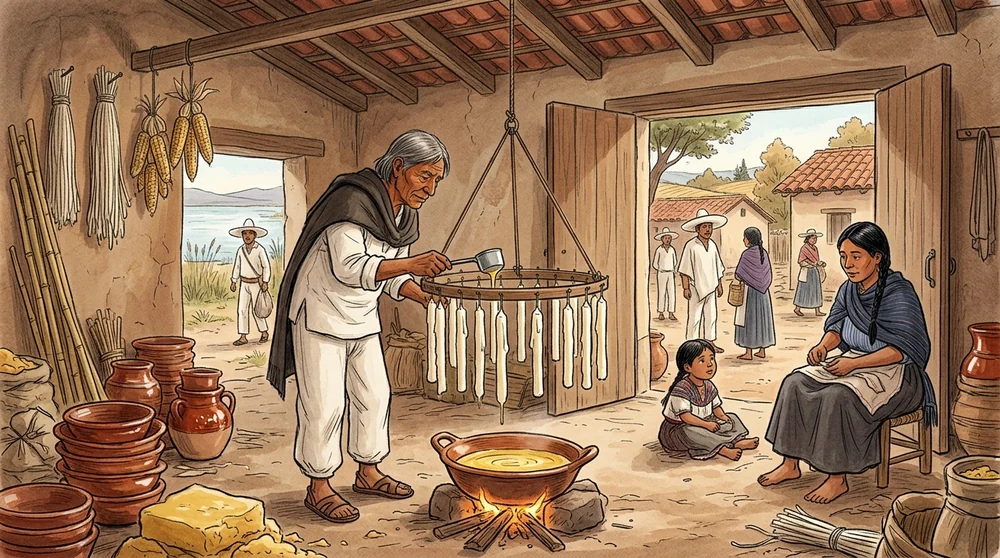
In 1945, what did one candle cost for the ofrenda, the Day of the Dead altar? In Tzintzuntzan, on the shore of Lake Pátzcuaro, an anthropologist living in the town wrote down the prices. The priciest beeswax candle cost one peso. And a laborer on the highway earned two pesos a day. Let's do the math: half a day's work for a single candle. Two or three people in town made them, with wax from the local beekeepers. Pure beeswax smoked less and burned longer. Paraffin candles were cheaper: seven to twenty centavos. Our family is preparing the grandfather's first ofrenda. And for a new ofrenda, one candle is never enough.
Cempasúchil and bread with a face ▶ 5:14
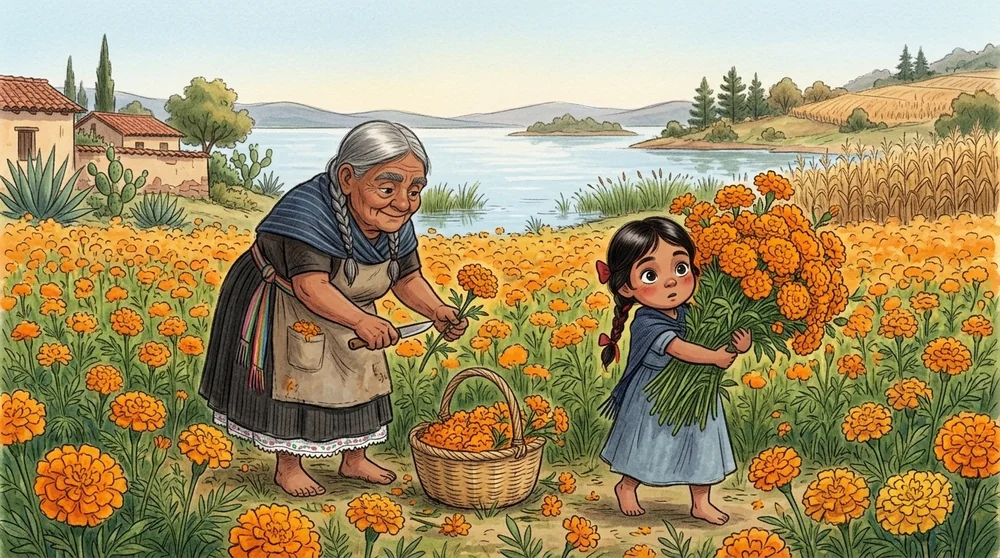
Now, the flowers. The first is cempasúchil, the yellow marigold of the dead, which in Tzintzuntzan they called simplasuche. In P'urhépecha, the grandmother's language, it's tirinkini today. Its petals decorated every home's altar, and in the cemetery they were scattered over the graves. Beside it, purple orchids the town called flor de ánima, the flower of the souls. Both dressed the arco: a little table with reed arches covered in flowers, with oranges, bananas, chayotes and pan de muerto, the bread of the dead. Assembled at home, the arco was carried to the cemetery and set on the grave. And what did an armful of marigolds cost? We don't know. The anthropologist, who noted almost every price, skipped that one. But he did note the shape of the bread.
In 1945, in a town on Lake Pátzcuaro, the pan de muerto, the bread of the dead, had a face: a human shape and currant eyes. An anthropologist living in Tzintzuntzan saw those loaves on the flower arch of the ofrenda, the altar for the dead. All over Mexico at the time, bread of the dead shaped like people or animals was common. Tzintzuntzan had two bakeries, and the anthropologist was struck by the «bewildering variety of shapes» they turned out. How much did that bread cost? We don't know. In the town's shops, an ordinary large loaf cost twenty centavos. Let's imagine our family's daughter choosing the loaves for her grandfather's first ofrenda, one by one, looking them in the eye.
October 31: ducks and angelitos ▶ 6:48
Up to a thousand canoes on a single lake, on the same day. It was October 31, on Lake Pátzcuaro. The fishermen gathered near the island of Janitzio, several men to a canoe, and drew their circles closed on the water. The ducks were hunted with spear throwers, and that day thousands of them fell. An anthropologist living on the lake in 1945 described it, and so did Frances Toor, a scholar of Mexican folkways: on the ofrendas, the altars of offerings, wild duck was «a food delicacy». And it showed in the price. A week earlier, the first ducks sold at the Pátzcuaro market for ninety centavos. On November 2, with the hunt over, for fifty. For our family, the duck is the finest thing on the grandfather's first ofrenda.
That same night of the 31st, the town isn't waiting for the grown-ups yet. It's the night of the angelitos, the children who died, and they got a fiesta of their own. The anthropologist recorded what one family in town spent on the fiesta for their daughter, who had died that year, from the account a relative kept. The musicians alone, forty pesos. The large wax angel, twenty-one. There were rockets, candles, a Mass and colored tissue paper. In all, two hundred two pesos and fifty centavos. With a laborer earning two pesos a day, the math is our own: more than a hundred days of work. It was a real fiesta, with music and rockets. Our family hears it from home, while they set the grandfather's table. Their night is tomorrow.
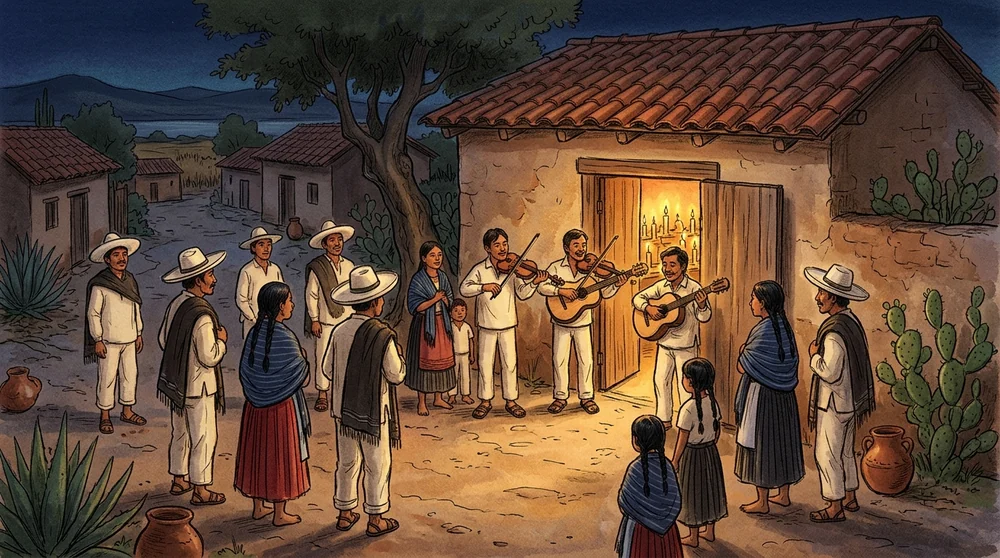
The grandfather's table ▶ 8:22
On November 1, the house smells of flowers and of cooking on the comal, the clay griddle. On the little table with pictures of the Virgin and saints, the family sets up the grandfather's ofrenda. Marigold petals and flor de ánima, white wax candles in clay candlesticks. The cooked duck. The loaves with currant eyes. Oranges, bananas, chayotes and cooked squash. It's his new ofrenda, his first. In the kitchen, the grandmother cooks the family's food for those days, dishes the anthropologist recorded: corundas, small triangular tamales in green corn leaves, and uchepos, from fresh corn ground on the metate, made only in season. Those are for the living. Passing the ofrenda, the grandmother straightens a flower. The grandfather's hat stays on its hook, as always. Now only the night is left.
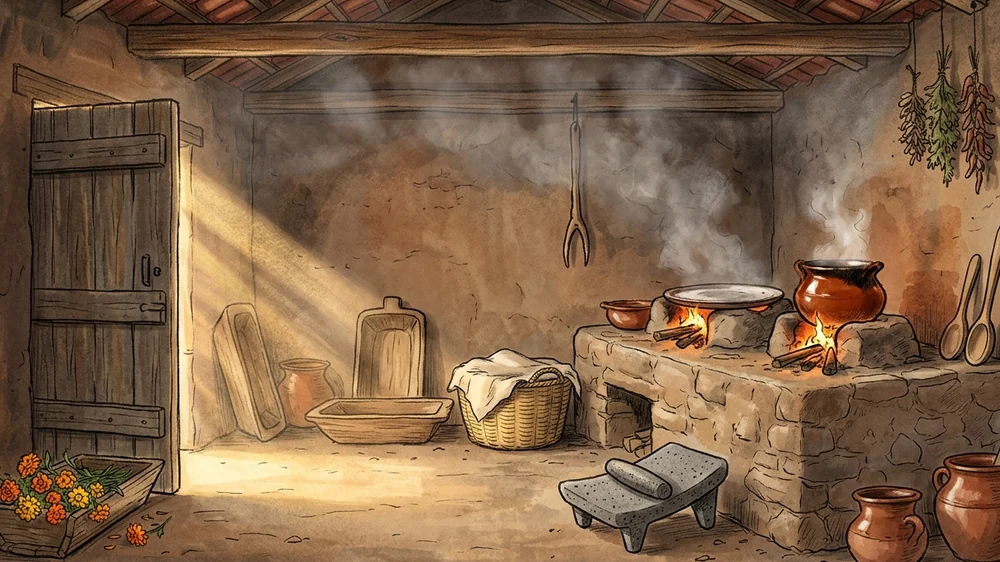
Do they come to eat? ▶ 9:22
If the grandfather comes back tonight, will he eat the duck? In 1945, in many parts of Mexico, people believed the dead came to eat. In Tzintzuntzan, on Lake Pátzcuaro, hardly anyone did. An anthropologist living in the town wrote it down: only a few said the ánimas, the souls of the dead, might come to eat. What they felt was something else: that the souls were «present, watching, appreciating the thoughtfulness of their survivors in remembering them». And no one ever spoke of seeing them. Across the water, on Janitzio, they said the same: the souls visit the island, but they do not eat. And the food? It was blessed, and in the end the living ate it. For our family, the grandfather's first ofrenda isn't for him to eat. It's for him to see that he's remembered.
The night of November 1 to 2 belongs to the souls of the grown-ups. Let's imagine it the way the family did, with what their town believed. The white candles, lit. The cempasúchil glowing like little suns. And in the doorway, tall and a little stooped, the grandfather. He's a cheerful calavera, a skeleton, but it's him: his thick white eyebrows, his gabán, the short serape, over his shoulders, and his white hat with the red band, the one on the wall. He comes in slowly and looks at his new ofrenda. The duck from the lake. The loaves with currant eyes, which seem to look back at him. He grins from ear to ear, which, for a skeleton, is saying a lot. He touches nothing: he's come to look. He lingers by the grandmother, who is praying, and sees the flower she straightened that afternoon. No one in the house sees him. He sees everything, and he's grateful. Before dawn, the family gets up: it's time for the cemetery.
Candles before dawn in the cemetery ▶ 11:13
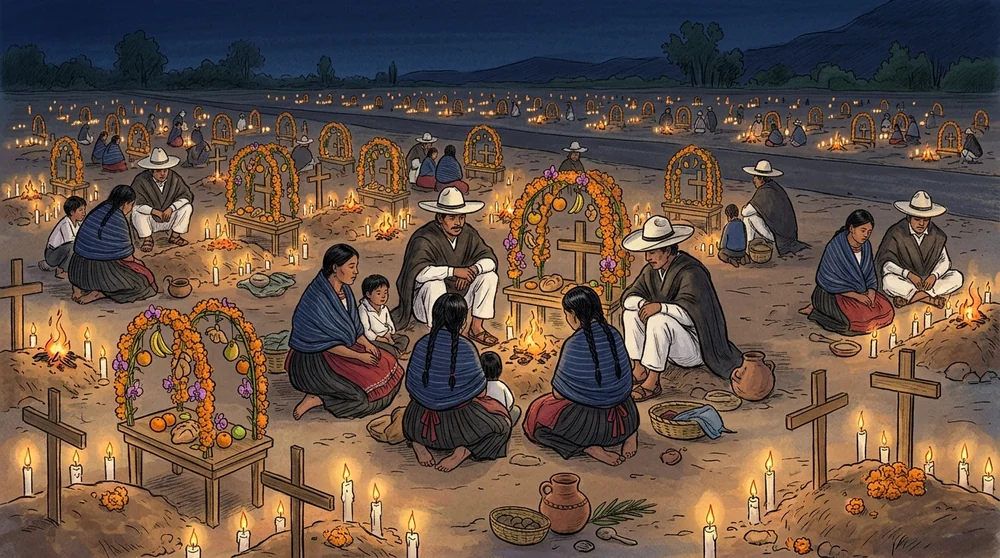
The cemetery fills with candles: it's four in the morning on November 2. That's how an anthropologist living in Tzintzuntzan, on Lake Pátzcuaro, saw it in 1945. It was the new cemetery, the one the highway cut in two. Families arrived with their flower arches and their food, scattered petals of cempasúchil, the marigold, over the graves, and lit the candles. Toward dawn there were perhaps forty graves like that, and «the twinkling of several hundred candles in the dark». The night was cold: people huddled, wrapped in their serapes, saying little. And all night long, some boys tolled the church bells for the dead. To keep warm, the boys built a fire, and people on their way to the cemetery brought them raw food to cook over it. Our family sets its flower arch on the grandfather's grave. It's his first year.
How many families kept vigil like this? According to the anthropologist, «perhaps most», the first year after a death. Fewer kept it up three or four years; very few, all their lives. On Janitzio, across the water, the night of the souls already drew tourists, by boat from Pátzcuaro. The women climbed to the cemetery with baskets and trays of food, and the little girls followed, clutching candles and cempasúchil. They laid out the food, set candles around the grave, and sprinkled the petals in the shape of a cross. And the anthropologist wrote it plainly: «No one shows signs of grief; rather, it is a pleasant annual outing to be enjoyed by all.» Frances Toor put it her own way: they were «giving warmth and companionship to their dead». And in this first year, our family isn't keeping vigil alone.
When day breaks, the cemetery changes. More people arrive: to chat with those keeping vigil, to eat a little, and to look. That's how the anthropologist saw it. The day before, the day of the angelitos, he had seen something more: visitors going from grave to grave stopped, prayed for a moment, and were given something from each ofrenda, a chayote, a bit of squash, a piece of fruit. Let's imagine the grandfather's ofrenda shared out among the neighbors that way. By eleven, most people had gone home, and the cemetery was empty again. That Friday, the Pátzcuaro market was the smallest of the whole year: no more than three hundred vendors, when on other days the anthropologist counted more than seven hundred fifty. It was the Day of the Dead, and it showed.
What it cost, and what remains ▶ 13:49
How much did the grandfather's first ofrenda cost our family? We don't have their accounts, but we have the prices, and we can do our own math. The two pots from that haggling, the large one and the small one, brought three pesos and twenty-five centavos. That bought three of the priciest beeswax candles, a peso each. Or three of the season's first ducks. Or fifteen large loaves. A new ofrenda, plentiful and the best of everything, couldn't come from a single sale. And the hat on the hook, the one no one wears, had cost seven and a half pesos new, almost four days of a laborer's pay. A gabán like his, thirty pesos. The ofrenda, though, was gone in one night: the wax burned down, the flowers dried, and the food was shared out at dawn. Spending it that way made sense. It was how they told the grandfather he was remembered.
Today, in Tzintzuntzan, people still keep vigil in the cemetery on the night of the souls, and still build arcos of reed and cempasúchil. Some things are new: today's ofrendas have photos of those who are gone, and the ones described in 1945 had none. In our family's house, the grandfather's white hat, with its red band, still hung on its hook on the wall. The ofrenda has changed on the outside. What's inside is still the same: a family that cooks, buys flowers, does the math, and lights candles for someone they love. And in your home? What's the one thing that's always on your ofrenda?
Words from this home
- ofrenda nuevaSay it: oh-FREN-dah NWEH-vah
- The offering for someone who died in the past year: the most abundant, with the best of everything.
- archSay it: AR-koh
- A reed frame covered in marigolds, fruit and bread, carried to the house and to the grave.
- vigilSay it: veh-lah-SYOHN
- The all-night vigil by the grave.
- soulsSay it: AH-nee-mahs
- The souls of the dead: 2 November was their day.
- angelitosSay it: ahn-heh-LEE-tohs
- The dead children, honored on 1 November.
- marigoldSay it: sem-pah-SOO-cheel
- The yellow-orange flower that decorates altars and graves.
- pan de muertoSay it: pahn deh MWER-toh
- On the 1945 arch, loaves shaped like human figures with raisin eyes.
Sources
- George M. Foster (with Gabriel Ospina), "Empire's Children: The People of Tzintzuntzan" (1948), fieldwork from 1945–1946
- Frances Toor, "A Treasury of Mexican Folkways" (1947), "The Day of the Dead"
- José Manuel Martínez-Aguilar and Mirna Rodríguez-Cázarez, "Entre dos mundos. La arquitectura efímera del Día de Muertos en Tzintzuntzan" (2023, in Spanish)
- Robert C. West, "Cultural Geography of the Modern Tarascan Area" (1948), houses and kitchens around the lake