
Caister, England · 1448
How Did People Sleep in a Medieval English Castle in Winter?
October 27, 2026 · 15 min · Audio in Spanish, English
Eastern England, the last day of October, 1448: at Caister Castle, someone goes room to room and writes down every bed, right down to the one in the stable. With that list, we spend a winter night with the people who worked in the castle, to find out how they really slept: who had a room, who had a feather bed, and where the straw pallets were.
The winter hall, the smaller one, with the tapestries; the great hall, where the list doesn't record a single bed; the bed in the stable, with its blue and red coverlet; the cook's coverlet, with roses and bloodhounds' heads; the porter's room, with its red wool curtain; the lord's bed, with a canopy and curtains of green worsted, and a pallet beside it. And who really did sleep on the floor by the fire: the scullions of the king's kitchen, according to an ordinance of 1526.
The story, to read
The whole episode, chapter by chapter. Tap the minute to watch from there.
A list of beds, 1448 ▶ 0:00
The last day of October, 1448. In a brick castle in eastern England, someone goes room to room, writing down every bed. How did people sleep in a medieval castle in the dead of winter? Not the lord: the people who worked for him. Tomorrow is All Saints' Day. In houses like this, the season of fire begins. Let's imagine a family that serves here. The father looks after the horses. And on that list, in the stable, there's a bed too.
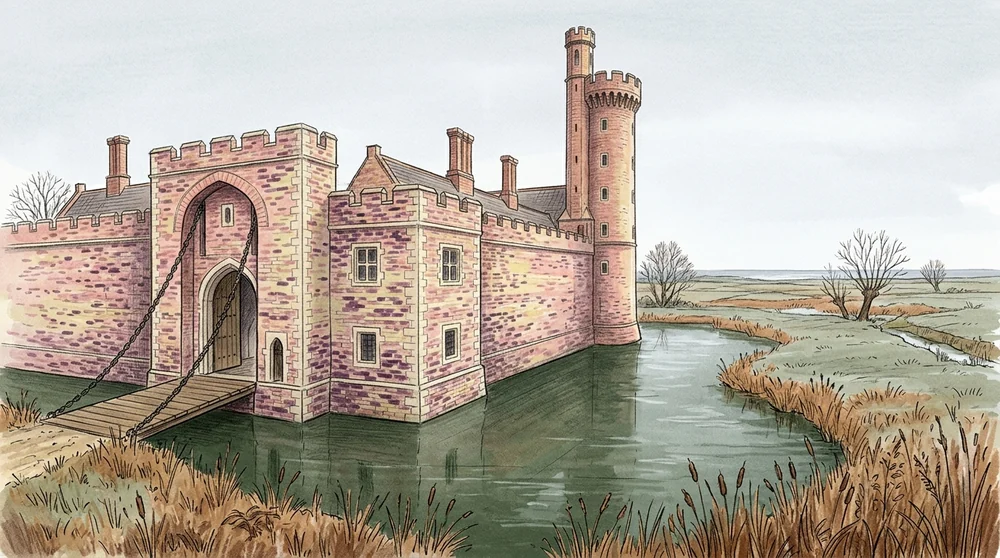
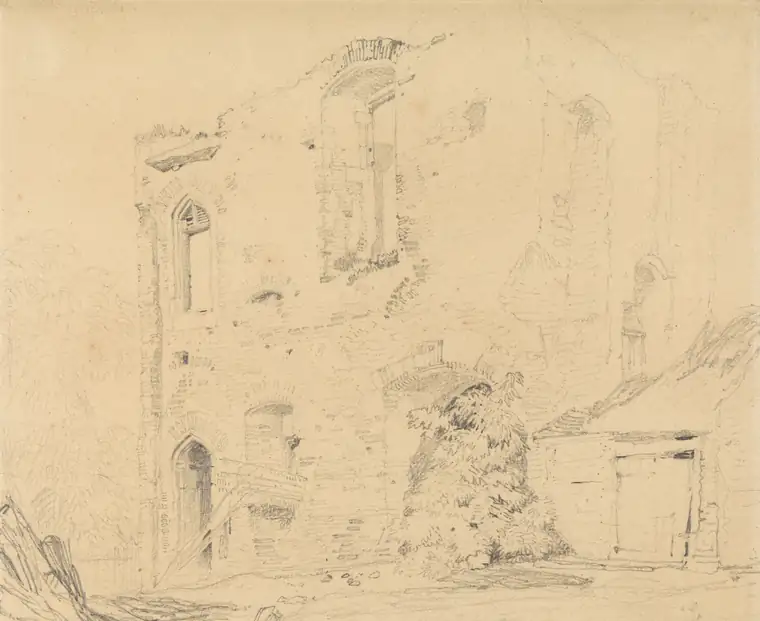
This family never existed. We've pieced them together from that list of beds and from English household books of those same years. The castle did exist: it was Caister Castle, near Yarmouth, close to the North Sea. A brick castle ringed by water, newly finished for Sir John Fastolf. But that winter, the lord wasn't there: he lived in London, and his people ran the castle. In our family, the father is a stable hand. The grandfather keeps the gate. The mother works here by day, and their little girl comes with her. We'll go through the beds in the surviving copy of the 1448 inventory. It may include a few additions from some years later, but it's the list for this house, room by room.
An account from almost twenty years earlier, before the castle was built, speaks of about two dozen people in the Caister household. The castle had two courtyards, and rows of rooms along its walls. So why did someone sit down to count its beds? The list doesn't say. A historian who studied the lord's papers found this: in April of that same year, two merchants from Yarmouth, with eight men, forced their way into the castle and carried off goods and wine. Maybe the inventory grew out of that. But the list is useful to us for something else. The usual story about castles is that in winter everyone slept together in the great hall, on straw, by the fire. Let's put that to the test, bed by bed. Starting with the fire.
The first fire of winter ▶ 2:12
What day was the winter fire lit in an English castle? There was a fixed date: the first of November, All Saints' Day. As one household book of the time puts it: "Bring in fire on All Hallows' Day." That day the fire was lit in the hall, and the winter allowances of firewood and candles began, to last until spring. They handed out split logs, bundles of sticks and coal, counted night by night. At Caister Castle, someone listed every bed on the last day of October, 1448. Just the day before. Was there a connection? We don't know. What Caister burned, we don't know either. But the next day, in the great houses, winter began for real: the winter of fire.
That first fire was lit in the hall. And Caister had two. A great hall, with crossbows and spears hung on its walls. And a smaller one, which the inventory calls the winter hall. According to the historian who studied the lord's papers, the great hall measured fifty-nine feet by twenty-nine, more than twice the size of the small one. The tapestries were in the winter hall. Why a separate hall for the cold? One explanation: the smaller hall was easier to keep warm. And in the great hall, the one from the usual story, the inventory lists not a single bed. That fits what historians say: by the fifteenth century, lords already ate apart, and officers had chambers. Even so, in the colder months, the hall was still a good place for servants to sleep. If anyone slept there at Caister, the list doesn't say. So we'll have to look for the beds somewhere else.
A bed in the stable ▶ 3:51
There was a bed in the stable of an English castle. It was the great stable at Caister, and in the surviving copy of its 1448 inventory, that bed has a mattress, a pair of sheets, and a coverlet of blue and red. No blanket, no bolster. And in the summer stable, another just like it. Whose was it? The list doesn't say. Most likely whoever looked after the horses. So in our story, it's our stable hand's bed. It isn't a heap of straw: it's a mattress, with sheets. Did he sleep there, with the horses, to stay warmer? The list doesn't say that either. Let's imagine he did: that tonight he lies down a few steps from the animals, listening to them breathe, his blue and red coverlet pulled up to his ears.
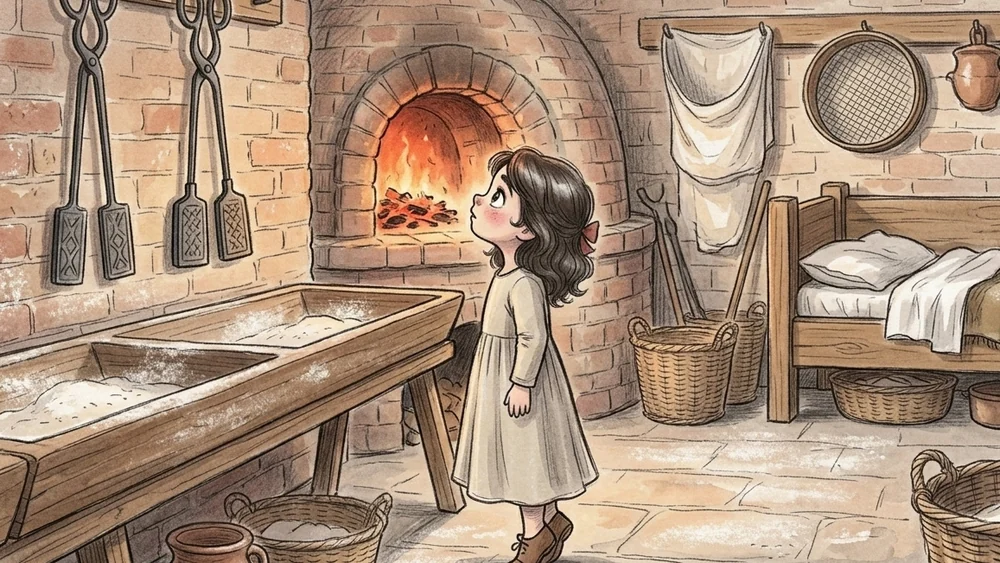
By day, let's imagine the mother working in the castle bakehouse, with the little girl beside her. That part is our reconstruction: how many women served at Caister, or what they did there, we don't know. The inventory names one woman's room, but not her work. And at court, some twenty years later, even the laundry was run by men: according to the king's household book, there were washerwomen only if there was a queen. In the Caister bakehouse there's a sieve for the flour, troughs for the dough, and two pairs of wafer irons. And right after the troughs, the list notes a mattress, with a blanket, sheets and a coverlet. Someone slept in the bakehouse. Who, we don't know.
Rooms with names ▶ 5:27
The cook at Caister Castle slept under a red coverlet with roses and bloodhounds' heads. We know this from a list of beds from 1448, which survives as a copy. His bedding: a feather bed, a bolster, two sheets and that coverlet. The list notes no blanket and no pillow. A room was listed under his name, but whether he slept alone, the list doesn't say. What it does list, pot by pot, is his kitchen. A great brass pot and plenty more pots. A frying pan, spits, a gridiron, a mortar, and even a bottle of vinegar. In the larder, salting tubs and a barrel of eels. Let's imagine that tonight, in his room, the cook slips in under his roses and his hounds.
In our story, the grandfather plays the porter, the keeper of the gate. And Caister's porter had a room, probably by the gate: the order of the list suggests it, since soon after it moves on to a room over the drawbridge. The castle had a water-filled moat, with drawbridges. In the porter's room, the inventory notes a feather bed, a bolster, sheets, a blanket and a covering cloth. And a red curtain made of say, a light wool cloth. Let's imagine the grandfather sitting by the gate, watching who comes in and who goes out. And every night, it's his job to shut it.
Going by the list, many rooms are named after someone. And most of those names belong to the household's own people. The gardener had a room, with two mattresses. The two auditors shared another: two mattresses, two blankets, two sheets, and a single bolster between them. For visitors' servants, there was a room with three feather beds and one more mattress. And in the officers' rooms, beds with cloth canopies. But be careful here: the inventory counts beds, not people. How many slept in each one, we don't know.
The ladder of beds ▶ 7:28
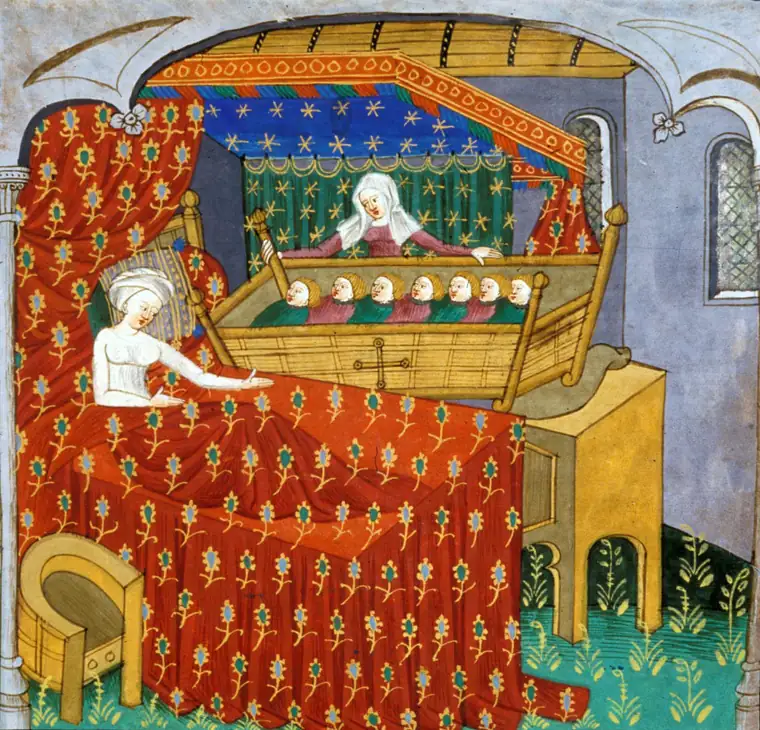
Line the beds up, from richest to plainest, and you see who was who in the house. At the top, a bed with a cloth canopy and curtains. Further down, a feather bed, like the cook's, with no canopy. And at the very bottom, a mattress with two sheets, like the ones in the stable or the bakehouse. It's an interpretation, but the list and those who've studied it back it up: your bed said who you were. It shows even in the blankets. In the stable, not a single one: just the coverlet. The porter had a blanket and, on top of that, a covering cloth. And the lord, two fustian blankets. If you've ever slept in a cold house, you know what one more blanket is worth. There's one step left to climb. At the very top, the lord's bed.
The lord's chamber ▶ 8:19
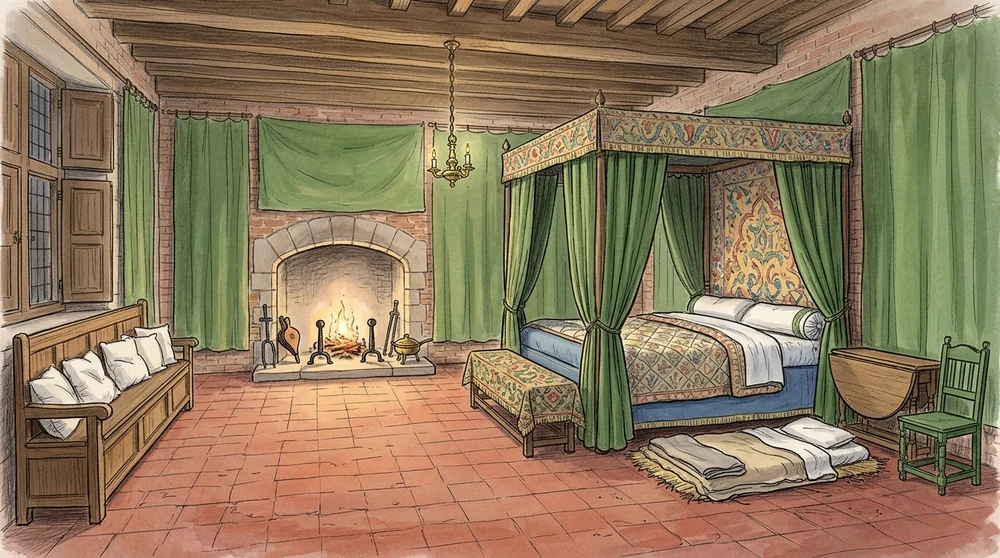
The lord's chamber had a bed hung with tapestry, with a canopy and three curtains of green worsted. By the fireplace, a pair of bellows and a brass chafer. But next to that bed, the inventory notes something smaller: a little pallet, with blankets, sheets and a coverlet. A pallet: a bed of straw. And it isn't the only one: other lords' chambers have them too. Who were they for? In great households, servants slept close to their master. One manual puts it in rhyme: "The yeoman usher, before the door, in the outer chamber lies on the floor." Others slept on pallets inside the chamber. The same manual tells the chamber grooms to make up pallets and straw beds. So on this list, pallets aren't in the stable: they're beside the great beds.
A servant drove the dog and the cat out of his lord's room. One fifteenth-century English servants' manual explains, step by step, how to put a lord to bed. It says it plainly: "Drive out dog and cat." The lord took off his day clothes and put on night clothes, and a cap tied snugly against the cold. The servant drew the curtains around the bed. He left a wax light burning all night. Another manual puts it in a basin, to keep the chamber safe from fire. Beside the bed, the chamber pot. And the animals, out. At Caister Castle, that winter of 1448, that bed stood empty: the lord lived in London. Even so, Ember, our family's dog, isn't taking any chances. He keeps well away from that door.
The lord also had a room for his clothes. On the list, it's his wardrobe: the garderobe. Today you'll often hear that the garderobe was the castle toilet. It's true that, out of discretion, the word was sometimes used for the toilet too. But the toilet had names of its own, like the privy, and we know nothing of Caister's. On this list, the garderobe holds clothes: the lord's. So much for his rooms. And everyone else? What did they have for the night?
Allowances, clothes and the gate ▶ 10:27
For Caister, we don't have the allowance. For another house, we do. In the household of the Duke of Clarence, twenty years later, one winter night's allowance for every two gentlemen was this: two split logs, three white candles, half a loaf of bread and half a gallon of ale. In summer, bread and ale only. And no man's servant could take any wood unless the ushers handed it over. Careful with that "every two": the wood and the candles went out in pairs, but they were allowances, not beds. Sleeping in pairs does show up in the king's household book: there, the ushers paired off the squires to sleep. At Caister, the only ones we know shared a room are the two auditors.
And what did they wear to get through the winter? The Caister inventory says nothing at all about what these people wore. But in great households, part of a servant's pay was clothing: a gown a year, the garment worn over everything else. At the royal court, servants of middle rank received wages and clothing, and the squires got clothing for winter and for summer. So in our story, the household gives our stable hand his gown. He's wearing it now, as the day winds down among the horses.
In the Duke of Clarence's household, in winter, the gates were barred at nine at night and not opened until seven in the morning. And no one could play dice or cards for money, except during the twelve days of Christmas. At Caister, we don't know what time the gate was shut. But let's imagine the grandfather closing it, with the moat on the other side, and going back to his room, the one with the red curtain. The mother and the little girl have already left: their day at the castle is over. Out in the stable, the father takes one last look at the horses. The night begins.
The fear of fire ▶ 12:18
In great houses, servants' light came from ordinary candles, the ones the books call "Paris candles", made of tallow, according to one historian. Wax was for the lords. So much fire and so many candles had a cost: the fear of a blaze. That's why the lord's night light burned in a basin. At the king's court, a little later, a night watchman made his rounds four times every winter night, playing his pipe, and checked every door for fire and for thieves. Whether Caister had anyone like that, we don't know. What we do know: the lord, far away, wasn't at ease. A year and a half after our list, he wrote from London that he often heard "many strange reports" of how his place at Caister was run: his wines, his clothes… And he asked that no idle man stay there.
Everyone on straw? Only half true ▶ 13:07
The scullions, the kitchen helpers of the king of England, slept on the ground, right by the fire. An ordinance from 1526 says so, complaining that they had long been accustomed to it. That's the picture from the usual story: people sleeping on the floor of a castle, close to the hearth. And it really happened. But at court, and almost eighty years later. In 1448, the list of beds at Caister Castle tells a different story. The officers had rooms, nearly all of them with feather beds, and even the bed in the stable was a mattress with sheets. The straw pallets were beside the lords' beds. So the idea that in a castle everyone slept together in the hall, on straw, is only half true.
What remains ▶ 13:51
Six years later, the lord came to live at Caister, and he died here in 1459. What tells us most about the people of that winter of 1448 is a list of beds, and not even the original: just a copy. But together with the manuals and the rules of other households, it tells us a lot. It tells us the winter fire was lit on All Saints' Day. That your bed said who you were. That the stable hand had a mattress and sheets, and that the pallets were beside the lords' beds. And now, the question is for you. In your home, when the cold really bites, where's the warmest spot? And who sleeps there?
Let's imagine the night of November first, 1448. In the winter hall, the first fire of the season is burning. The grandfather has shut the gate and is drawing his red curtain. In the stable, the father pulls up his blue and red coverlet and listens to the horses breathe. And in the lord's chamber, the great bed with its green curtains stands empty. Bread, roof and fire — that's how they managed at Caister Castle.
Words from this home
- feather bedSay it: «feather bed»
- A feather-filled mattress, not the whole bed.
- palletSay it: PAL-it
- A straw or rush bed on or near the floor.
- truckle bedSay it: «a truckle bed»
- A low wheeled bed kept under the main bed and pulled out at night for the servant.
- testerSay it: «the tester and canopy»
- The cloth hangings of a bed: headboard cloth and canopy, with curtains around.
Sources
- The 1448 Caister inventory (copy), in The Paston Letters III (1904), no. 389
- Lesley Fraser, PhD thesis on Sir John Fastolf (Edinburgh, 2023)
- David Rundle, in The Library (2024)
- Historic England, "Caister Castle", list entry 1002882
- Ordinances of the Duke of Clarence's household (1468)
- Liber Niger, the household book of Edward IV (c. 1471)
- The Eltham Ordinances, court of Henry VIII (1526)
- John Russell, The Boke of Nurture (15th century), ed. Furnivall
- The Boke of Curtasye (c. 1460), ed. Furnivall
- Letter from Sir John Fastolf (1450), in The Paston Letters II, no. 125
- Giles Gasper, on medieval great halls (Durham, 2022)
- Wiktionary, "pallet"
- Wikipedia, "Garderobe"